
Documents Required for Notarization in Saudi Arabia | Najiz Guide
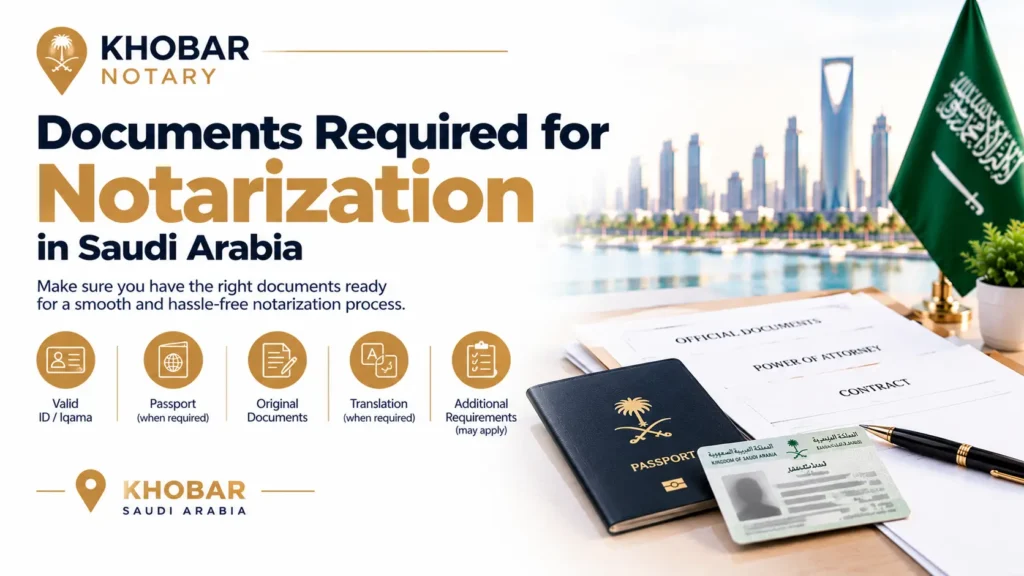
Before heading to a notary or starting a notarization request through Najiz, most people have one question: what exactly do I need to bring? The answer depends on the type of transaction, but there’s a core set of documents that applies to almost every notarization in Saudi Arabia.
This guide covers what you’ll typically need, based on the Ministry of Justice’s notarization regulations and common procedures used across different transaction types. What is a Notary Public in saudi arabia ?
What Does "Notarization Documents" Actually Mean?
Under Saudi notarization regulations, a notary (كاتب عدل) or licensed notary is required to verify the eligibility, identity, and capacity of the parties involved, and to confirm that the documents submitted are valid and reliable before completing any notarization. In practice, this means you need to bring documents that let the notary confirm who you are, what you’re authorized to do, and what exactly you’re notarizing.
Who Needs to Prepare These Documents?
This applies to:
- Individuals notarizing a power of attorney, declaration, or personal document
- Businesses notarizing contracts, company documents, or commercial agreements
- Anyone representing another person or entity in a notarization request
- Expats and non-Saudi residents completing notarization for personal or business matters
Core Documents Required for Most Notarizations
While specific requirements vary by transaction, these documents are commonly needed across most notarization types:
- Valid National ID or Iqama (residency permit) — required to verify the identity of all parties involved
- The original document to be notarized — whether it’s a contract, declaration, or power of attorney
- Proof of authority, if representing someone else — such as a guardianship deed or appointment decision, when the person submitting the request is acting on behalf of another individual or entity
- Any additional documents specific to the transaction type, as determined by the notary’s office based on the nature of the request
Documents for Specific Transaction Types
Beyond the core documents above, certain transactions require extra paperwork:
For contract notarization:
- National ID copies (originals and copies) for all parties
- The deed number and date, if the contract relates to a previously registered deed
- Proof of fee payment, where applicable
For company document notarization:
- Commercial registration details
- Documents proving the authority of whoever is signing on the company’s behalf
For representing someone else:
- A deed of guardianship, power of attorney, or official appointment decision confirming your authority to act on their behalf
How Documents Are Submitted
Many notarization procedures in Saudi Arabia are now completed electronically through the Najiz platform. The general process involves:
- Preparing your documents — gathering IDs, originals, and any transaction-specific paperwork.
- Scanning and uploading them — documents are typically submitted as clear PDF scans or photos through the electronic system.
- Reading and signing in front of the notary — even with electronic submission, the actual signing and verification step is completed with the notary confirming the details.
Important Things to Know
- Requirements genuinely do vary by transaction type — what’s needed for a power of attorney differs from what’s needed for a company contract.
- Documents must be valid and current. Expired IDs or outdated supporting paperwork are a common reason for delays.
- If you’re representing someone else, having clear proof of that authority is essential without it, the notary cannot verify you’re entitled to act on their behalf.
- It’s worth confirming the specific document list for your exact transaction with the Ministry of Justice, Najiz, or your notary’s office beforehand, since requirements can be updated.
Need Help Preparing Your Documents in saudi Arabia?
Not sure exactly what you need for your specific notarization request? Khobar Notary can guide you through the requirements for contracts, powers of attorney, company documents, and more, so you arrive prepared and avoid delays. Contact us today to confirm what’s needed for your transaction.
Conclusion
Having the right documents ready before starting a notarization request saves time and avoids unnecessary delays. While the core requirements valid ID and the original document apply broadly, always check the specific list for your transaction type beforehand.
Frequently Asked Questions
1. What is the most basic document needed for any notarization in Saudi Arabia?
A valid National ID or Iqama is required in nearly all cases, along with the original document being notarized.
2. Do I need original documents, or are copies accepted?
Original documents are generally required, though copies of identification are also commonly requested alongside the originals.
3. What if I'm notarizing something on behalf of someone else?
You’ll need proof of your authority to act on their behalf, such as a power of attorney, guardianship deed, or official appointment decision.
4. Are the required documents the same for every type of notarization?
No. While there’s a common baseline (ID, original document), specific transactions like contracts or company documents require additional supporting paperwork.
5. Can I submit my documents online through Najiz?
Yes, many notarization procedures allow documents to be scanned and uploaded electronically, though the final signing step is still completed with the notary.